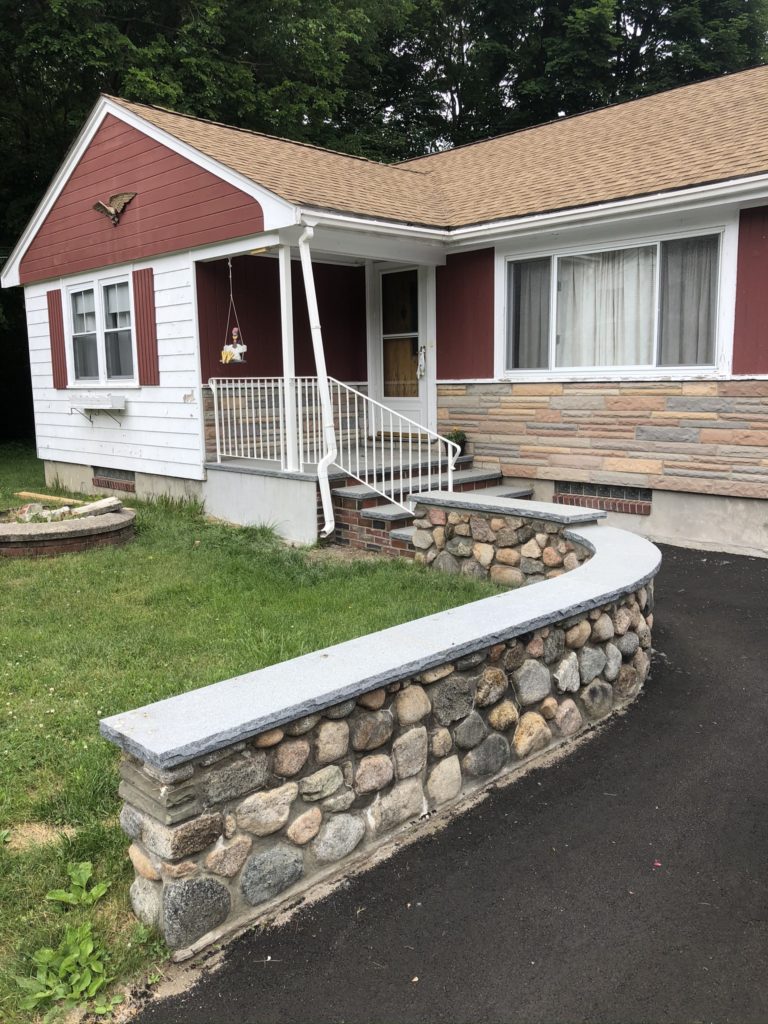
Brick step repair covers a range of work, from an afternoon of fresh mortar joints to a full rebuild from the footing up. Homeowners calling about crumbling front steps often assume the whole staircase has to come out. Usually it does not. The right repair depends on what failed, and on brick steps the failure almost always starts in one of three places: the mortar joints, individual bricks and treads, or the base underneath. Each repair level below comes with what the work involves and why the calendar matters more for steps than for almost any other masonry on the house.
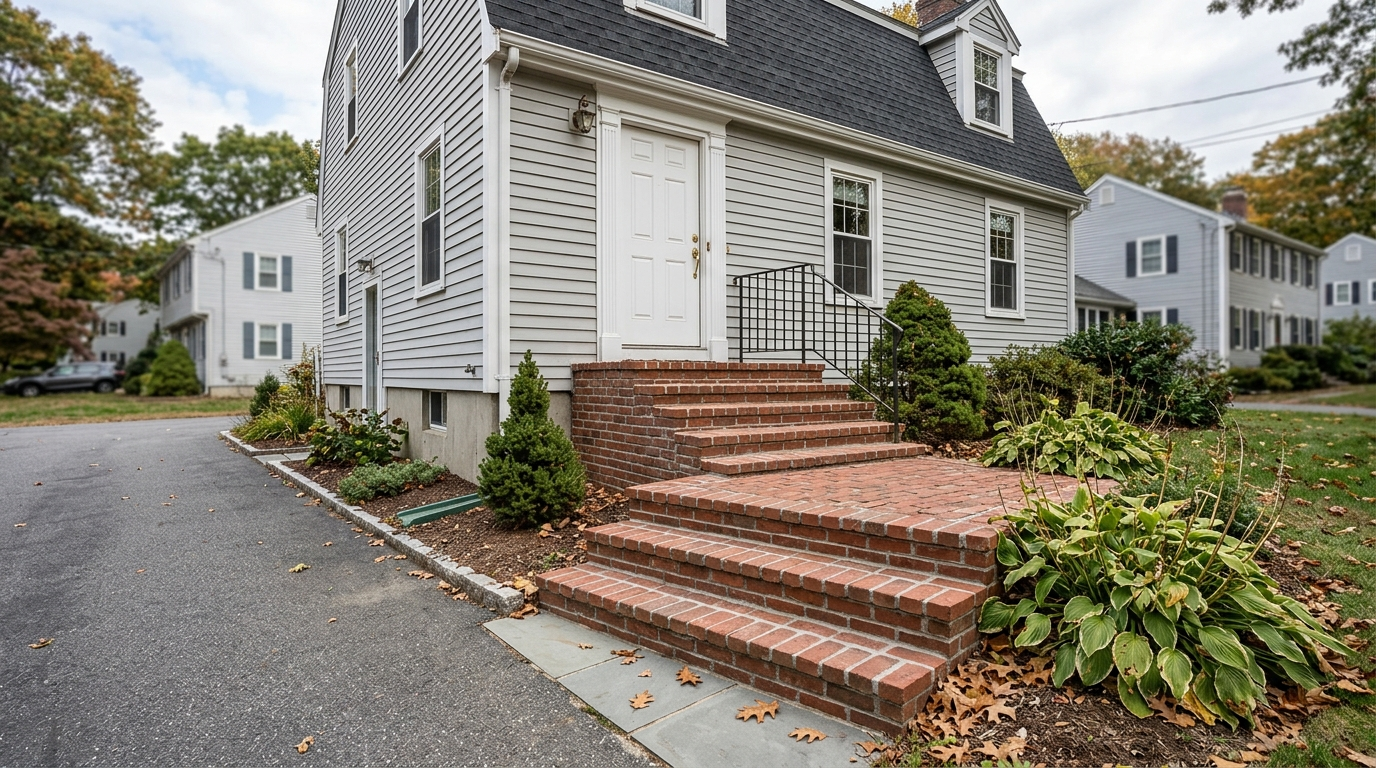
Why Brick Steps Fail First
Steps take more punishment than any other brickwork on a property. A wall sheds rain and dries out. Steps hold it. Treads are horizontal, so water sits on them, soaks into the mortar joints, and settles into the tread surfaces. In a New England winter that water freezes, expands about nine percent, and pries the masonry apart from the inside. Then it thaws, soaks deeper, and freezes again. Dozens of these freeze-thaw cycles can run in a single winter, and steps sit at ground level where splashback, snow piles, and shade keep them wet longer than the walls above them.
De-icing salt accelerates the damage. Salt lowers the freezing point of water, which sounds helpful but means more freeze-thaw cycles in borderline temperatures, and the salt itself migrates into brick and mortar where it crystallizes and pushes material apart. The white haze on old steps, called efflorescence, is that salt working its way back out. This is why brick front steps often need repair a decade or more before the chimney or the walls: they face the same weather plus standing water, foot traffic, and a winter's worth of salt.
Repointing: When New Mortar Is the Whole Fix
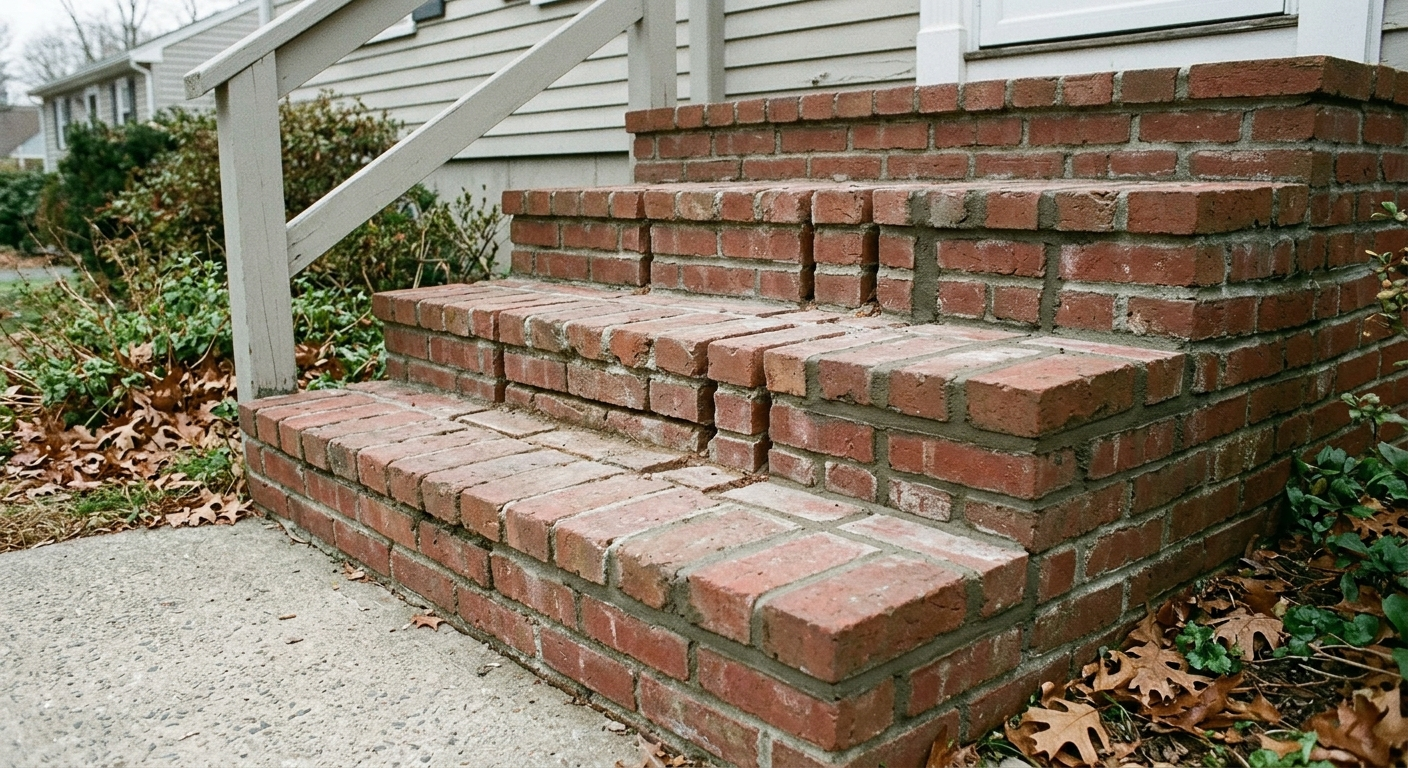
Mortar is designed to be the sacrificial part of a masonry assembly. It is softer than the brick, so it absorbs the stress and weathers first, and it is meant to be renewed. When the joints on a set of steps are cracked, powdery, or receding but the bricks themselves are sound and the steps sit level, repointing is often the entire repair.
Pointing brick steps means cutting or raking the failed mortar out of the joints to a sound depth, typically about two to two and a half times the joint width, cleaning the cavity, and packing in new mortar matched to the original in strength and color. Matching matters. Mortar that is much harder than the surrounding brick can force future cracking into the brick faces instead of the joints, which turns a renewable repair into permanent damage. On older homes a mason may use a softer, lime-rich mix for exactly this reason.
Done at the right time, repointing restores the weather seal on the steps and can add many years of service. It is the least invasive repair level and usually the least expensive, and catching joint failure early is what keeps a repair at this level.
Replacing Individual Bricks and Treads
When water gets past the joints, individual bricks start to spall: the faces flake or pop off, leaving a rough, crumbly surface. Treads crack under foot traffic and frost. A brick with a spalled face has lost its hardest, most weather-resistant layer and will keep deteriorating, so patching over it rarely holds.
The fix at this level is surgical replacement. A mason cuts out the damaged units, cleans the cavity back to sound material, and lays new brick or tread stock in fresh mortar, matched as closely as available supply allows to the size and color of the originals. On steps this commonly means replacing a handful of face bricks, a cracked tread, or a section of the top platform while the rest of the staircase stays in place.
Fixing brick steps this way makes sense when the damage is scattered and the structure is stable. The steps stay usable through most of the work, the cost stays tied to the number of units replaced, and the repair blends in once the new mortar weathers. What this level cannot fix is movement. If bricks are failing because the steps are shifting, replacements crack the same way the originals did.
When Steps Need a Rebuild
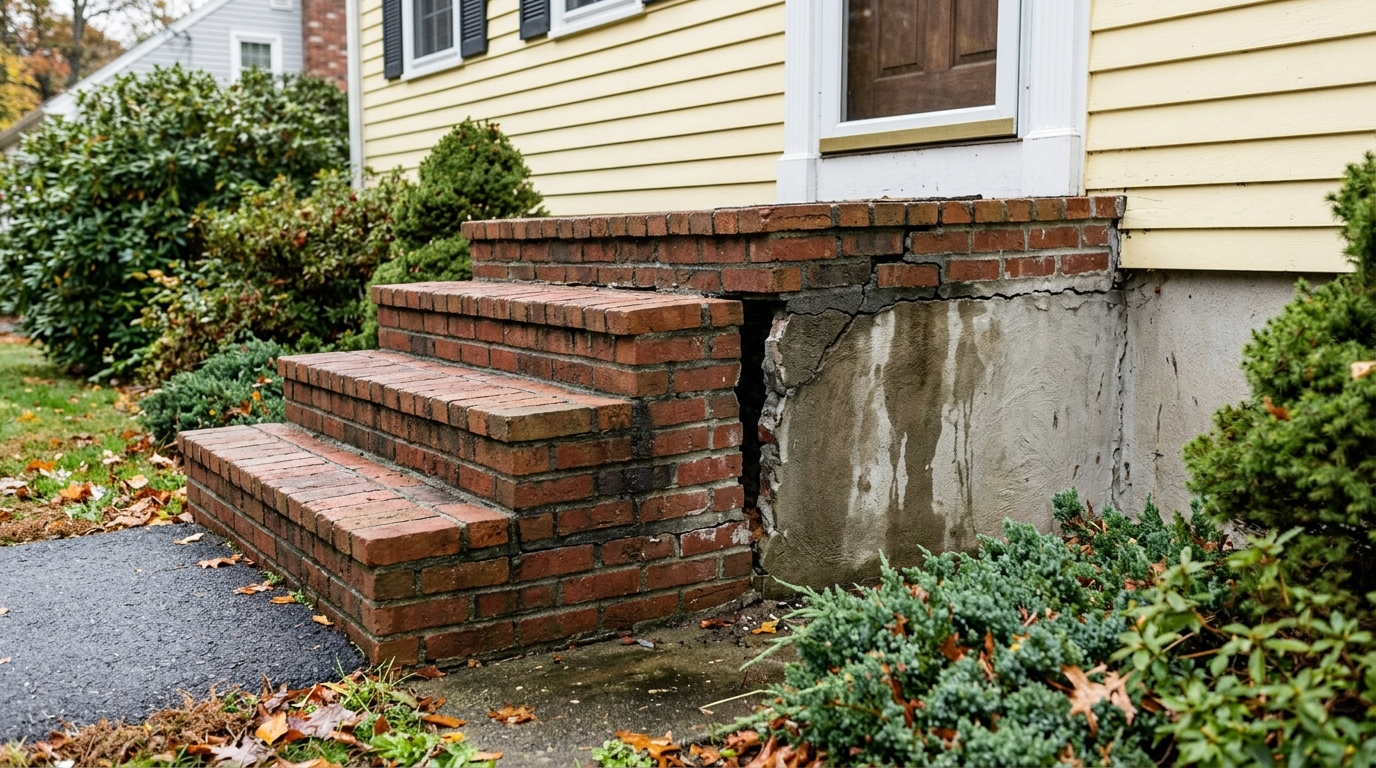
Some symptoms point below the brick. Steps that have pulled away from the house, a staircase leaning to one side, treads that have gone visibly out of level, or wide cracks running through multiple courses usually mean the base has settled or the internal structure has failed. Many older brick staircases were built over rubble fill or on shallow footings, and decades of water infiltration and frost can wash out or heave that support.
Once the base is moving, surface repairs are temporary by definition. The sound repair is a rebuild: the brick is removed, the base is excavated and rebuilt on proper footing and compacted material, and the steps are relaid, often reusing the original brick where it is still sound. A rebuild can cover one failed corner or the entire staircase, depending on how far the settlement extends. It is the most involved repair level, and it is also the one that resets the clock, because the new steps stand on a base built to drain and to resist frost.
An honest assessment separates these cases. A contractor who quotes a rebuild without checking whether repointing would hold, or who offers to repoint steps that are visibly settling, is guessing with your money.
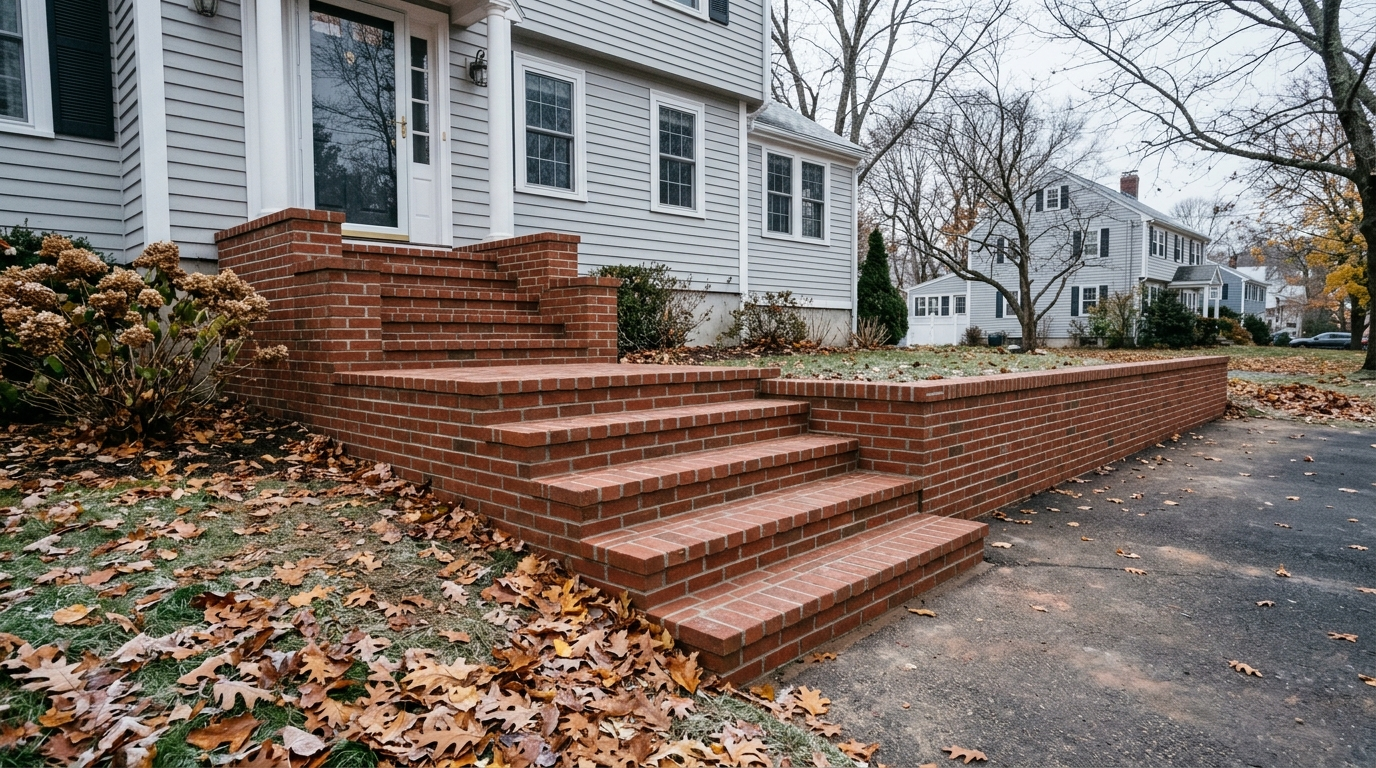
Timing the Work Before Winter
Mortar needs time and moderate temperatures to cure. Fresh mortar that freezes before it cures properly loses strength it never gets back, so cold-weather masonry work requires protection measures, and mid-winter repairs are limited for good reason. The practical window for step repair in Massachusetts runs from spring through mid fall.
Fall timing carries one more consideration: salt. De-icing salt is hard on all masonry and harder on fresh masonry, because young mortar is more porous and more vulnerable to salt-driven scaling. Steps repaired in September or October get weeks of curing before the first storm, and going easy on salt through that first winter (sand provides traction without the chemistry) protects the investment. Steps left unrepaired through the winter face the opposite math: every freeze-thaw cycle works on the open joints, and damage that would have been a repointing job in October can involve brick replacement by April.
What Each Repair Level Typically Costs
Exact pricing depends on the site, so treat this as cost logic rather than a price list. Repointing is generally the least expensive path, priced around the labor of cutting and refilling joints. Brick and tread replacement costs more per unit because of the cutting and matching involved, but the total stays proportional to the damage: five bricks cost far less than fifty. A rebuild is the largest number, since it includes demolition, excavation, base work, and relaying, though reusing sound original brick can hold the material cost down.
The variable a homeowner controls is timing. Masonry damage compounds, because every failure level admits more water and accelerates the one below it. Failed joints let water reach the brick. Failed brick lets water reach the base. The earlier the repair, the lower the level, and the smaller the bill.
If your front steps are showing open joints, flaking brick, or movement, the useful first step is an inspection that identifies which repair level the steps actually need. Request a step inspection and a written repair estimate before winter, while the calendar still allows the work to cure and the season has not yet added another round of damage.