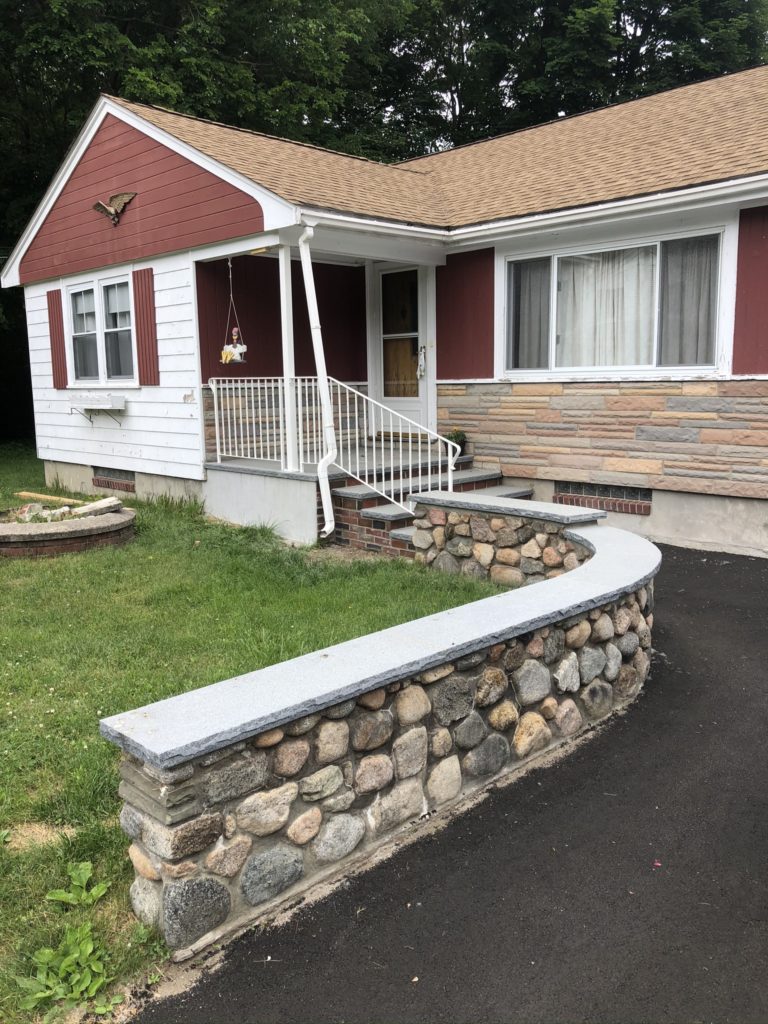
Most masonry problems around a Greater Boston home start in the joints, not the brick or stone. Mortar is the softer material by design, and after decades of rain, freeze-thaw cycles, and de-icing salt, it wears out while the masonry around it stays sound. Repointing is the repair for exactly that condition: the failed mortar comes out, new mortar goes in, and the wall, steps, or foundation keeps its original brick and stone. Homeowners searching for stone mortar repair are usually describing a repointing job without knowing the trade term for it.
What Repointing Is and What Failing Joints Look Like
Repointing means removing deteriorated mortar from the joints between bricks or stones to a sound depth, then packing and tooling fresh mortar into the cleaned joint. The masonry units themselves stay in place. The repair restores the weather seal and the load path through the wall without disturbing what still works.
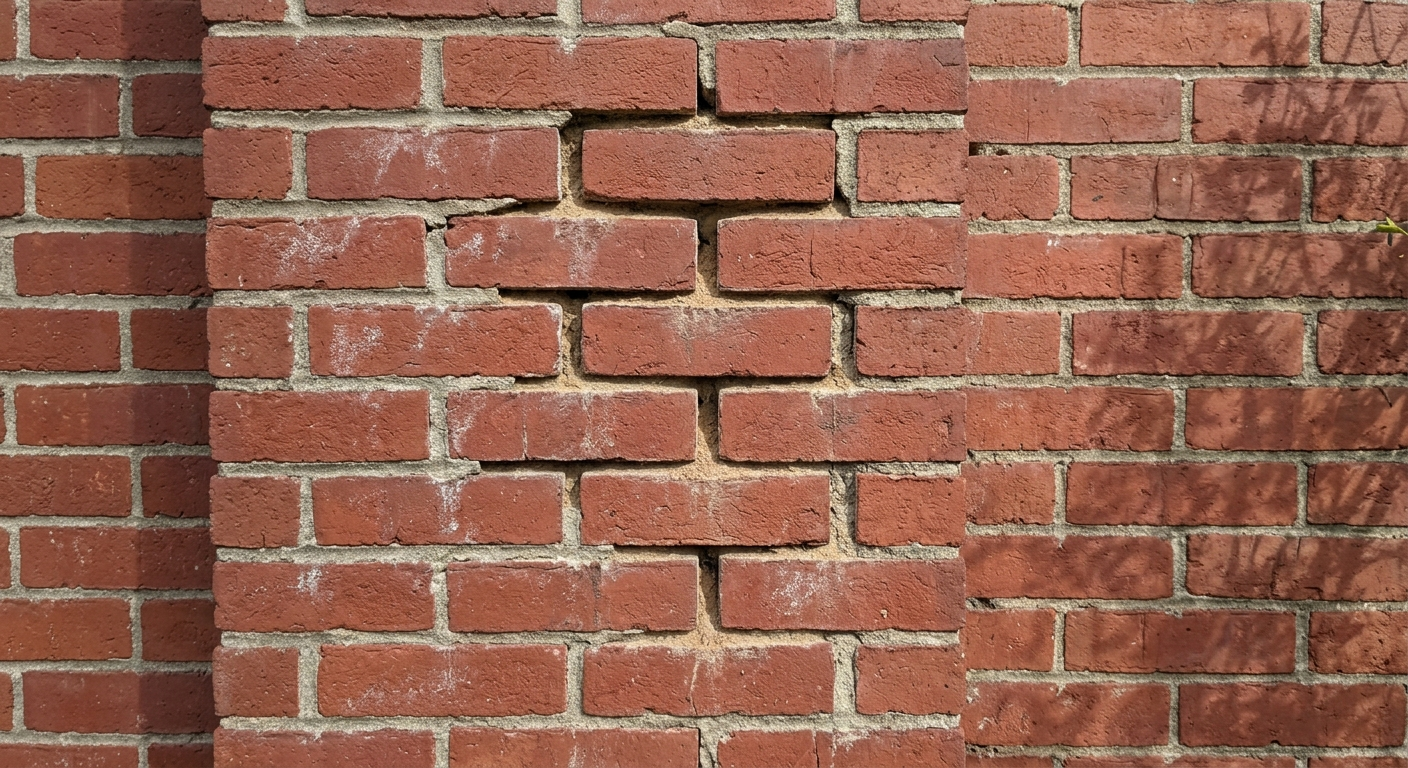
Failing joints announce themselves in a few consistent ways. Mortar that crumbles to sand under a fingertip or a key has lost its binder. Hairline cracks along the joint lines widen over seasons as water gets in and freezes. Joints recessed noticeably behind the face of the brick or stone have eroded; on older walls the gaps can be deep enough to hold a coin. Missing chunks of mortar, white mineral staining (efflorescence) below a joint, and damp interior walls behind exterior masonry all point the same direction. Repairing mortar between stone follows the same logic as brick, though stone joints are usually wider, less regular, and slower to rake out.
Why Mortar Fails Before Masonry Does: The Sacrificial Joint
Mortar is meant to be the weak link. A properly built wall pairs masonry with a mortar slightly softer than the units around it, so seasonal movement, moisture, and salt attack the joints instead of the brick or stone. The joint absorbs the damage, then gets renewed. That is the whole maintenance model of traditional masonry: the units can last a century or more, while the joints typically need attention every few decades depending on exposure.
New England weather accelerates the cycle. Water enters the smallest crack, freezes, and expands, and each freeze-thaw pass opens the joint a little further. Horizontal surfaces, chimney tops, steps, and walls near walkways that see de-icing salt fail first. This is why a wall can look structurally fine while its joints are visibly wasting: the system is doing what it was designed to do, and the design assumes someone eventually repoints.
Mortar Matching on Older New England Homes: Lime Versus Portland
Homes built before roughly the 1930s were often laid in lime-based mortar, which is softer and more flexible than the portland cement mixes that became standard later. The difference matters more than it sounds. When a hard modern mortar is packed into the joints of a soft-brick or fieldstone wall laid in lime, the joint becomes stronger than the masonry around it. The seasonal movement that the old mortar used to absorb now transfers into the brick and stone, and the units themselves begin to crack and spall. The repair causes the next problem.
A mason working on an older home identifies what is already in the wall, by age, by how the existing mortar crushes, and where warranted by testing, and matches the new mix to it in hardness, color, and joint profile. On a mid-century or newer home, a standard portland-lime mix is usually correct. How to repair mortar cracks in a stone wall starts with the same question: what mortar is the wall already built with?
The Repointing Process: Raking, Depth, Tooling, Cure
The work runs in a fixed order. First the failed mortar is raked or ground out, typically to a depth of about two to two and a half times the joint’s width, so the new mortar has enough body to bond and carry weather. Shallow smearing over a failed joint, sometimes called buttering, tends to pop off within a few seasons because there is nothing behind it.
The cleaned joints are brushed out and dampened so the dry wall does not pull water from the fresh mix too fast. Mortar then goes in, packed in lifts on deeper joints, and is tooled to a profile that sheds water and matches the original work. Finally the mortar cures. Curing is slow chemistry, not just drying, and joints kept mildly damp and protected for the first days gain strength properly. On a typical repointing job the raking takes as long as the filling, which surprises homeowners who expect the new mortar to be the bulk of the labor.

Timing: Why Fall and Spring Suit the Work
Fresh mortar cures best in a moderate temperature band, roughly between the 40s and 80s Fahrenheit. Below that range the water in the mix can freeze before the mortar gains strength, which ruins the joint; well above it, the mix dries too fast and cures weak. Masons can extend the season with cold-weather practice and protection, but the margin narrows and the risk rises.
That chemistry is why the best time of year to repoint brickwork in Massachusetts is usually fall or spring: long stretches of mild days, cool nights that stay above freezing, and time for the joints to cure before the first hard frost or the summer heat. Fall repointing carries one extra benefit here, since joints sealed in October face winter’s freeze-thaw cycles closed instead of open. Homeowners who spot crumbling joints in late summer are well positioned; the same discovery in December generally waits for spring.
Repointing Versus Rebuilding, and the Cost Logic
Repointing makes sense while the wall itself is still true. Sound units, straight lines, failed joints: that is the repointing case, and it is the cheaper path because the masonry stays in place and only the joints are renewed. The math changes when the structure has started to move. A leaning or bulging wall, stair-step cracking that keeps growing, stones displaced from their beds, or brick faces spalling across a whole section point past the joints to the base or the wall’s core, and new mortar packed into a moving wall fails on the same schedule as the movement.
Cost on a repointing job scales mainly with joint length, joint depth, access (ground-level wall versus chimney or upper story), and whether the mortar needs custom matching on an older home. Deferring the work runs the scale in the other direction: open joints let water into the wall, water damages the units, and a repair that would have been repointing becomes partial rebuilding. Chimneys concentrate all of these factors, weather exposure on four sides plus flue gases, and chimney repointing is its own service with its own inspection points.
An inspection settles which side of the line a wall is on. Adam’s Quality Masonry looks at the joints, the units, and the structure behind them, and puts the findings in writing. Request a mortar joint inspection and repointing estimate, and the repair can be scoped while it is still just mortar.