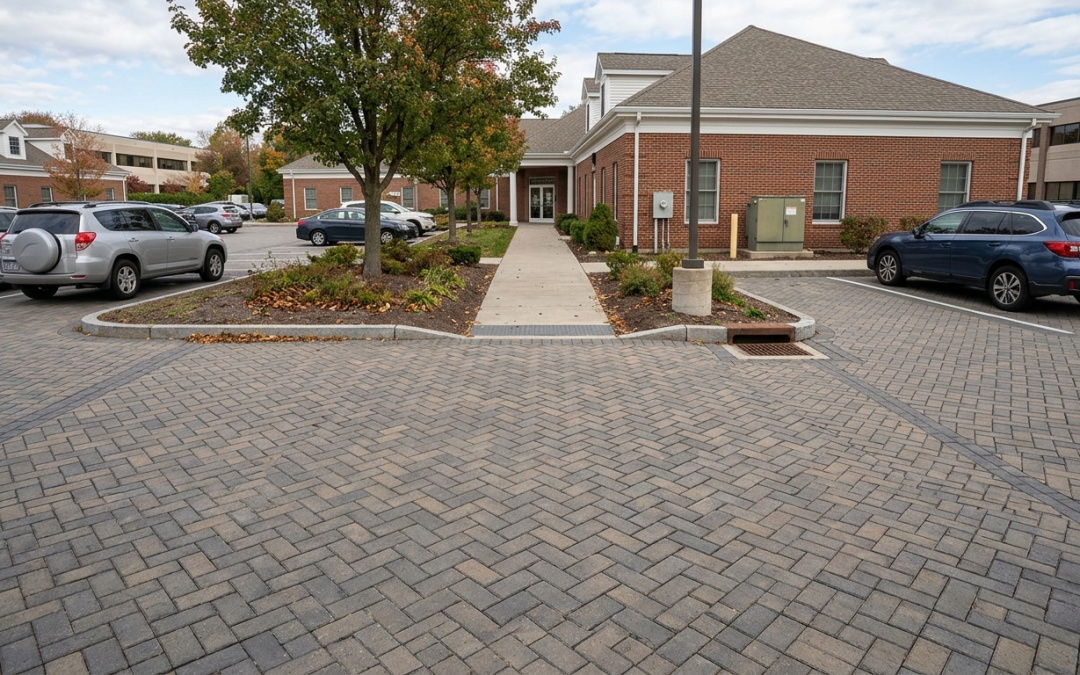
A paver surface on a commercial property does a different job than the same material in a backyard. It carries delivery trucks, plow blades, and thousands of foot crossings a season. It also carries liability: a heaved paver on a residential patio is an annoyance, while the same heave on an office walkway is a trip hazard with a claim attached. Commercial pavers are chosen as a system, not a product, and the properties that get long service from them are the ones where the manager asked about load, accessibility, maintenance, and base construction before asking about color.
That decision typically works through the same sequence, section by section, for the person responsible for the property after the crew leaves.
What Separates Commercial-Grade Pavers From Residential Product
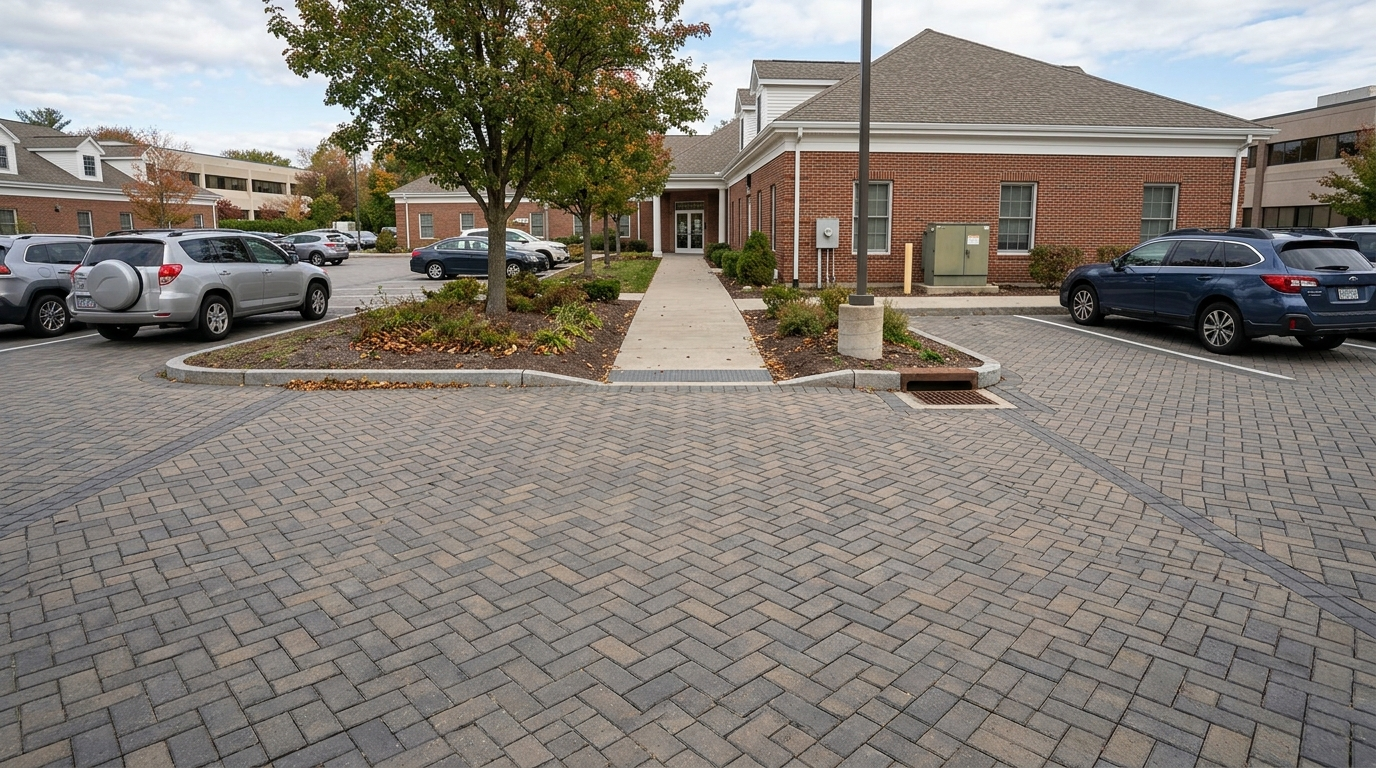
The paver itself is the visible difference, though not the most important one. Commercial-grade pavers are generally manufactured to a tighter standard than the economy product sold for residential patios. In the United States, concrete pavers made to the ASTM C936 specification are tested for compressive strength and water absorption, which is what lets them survive freeze-thaw cycles and de-icing salt without spalling. Thickness matters too: pavers intended for vehicle traffic typically run 80 millimeters (about 3 1/8 inches), while pedestrian-only product can be thinner.
The larger separation is everything around the paver. A residential install and a commercial install can use the same stone and end up with very different lifespans, because the commercial system includes a deeper engineered base, edge restraints designed for plow and turning loads, and joint materials selected for the traffic they will see. When a supplier quotes "commercial pavers," the useful follow-up question is what specification the paver meets and what system it is designed to sit in.
Load Ratings: Walkways, Plazas, and Vehicular Areas Need Different Systems
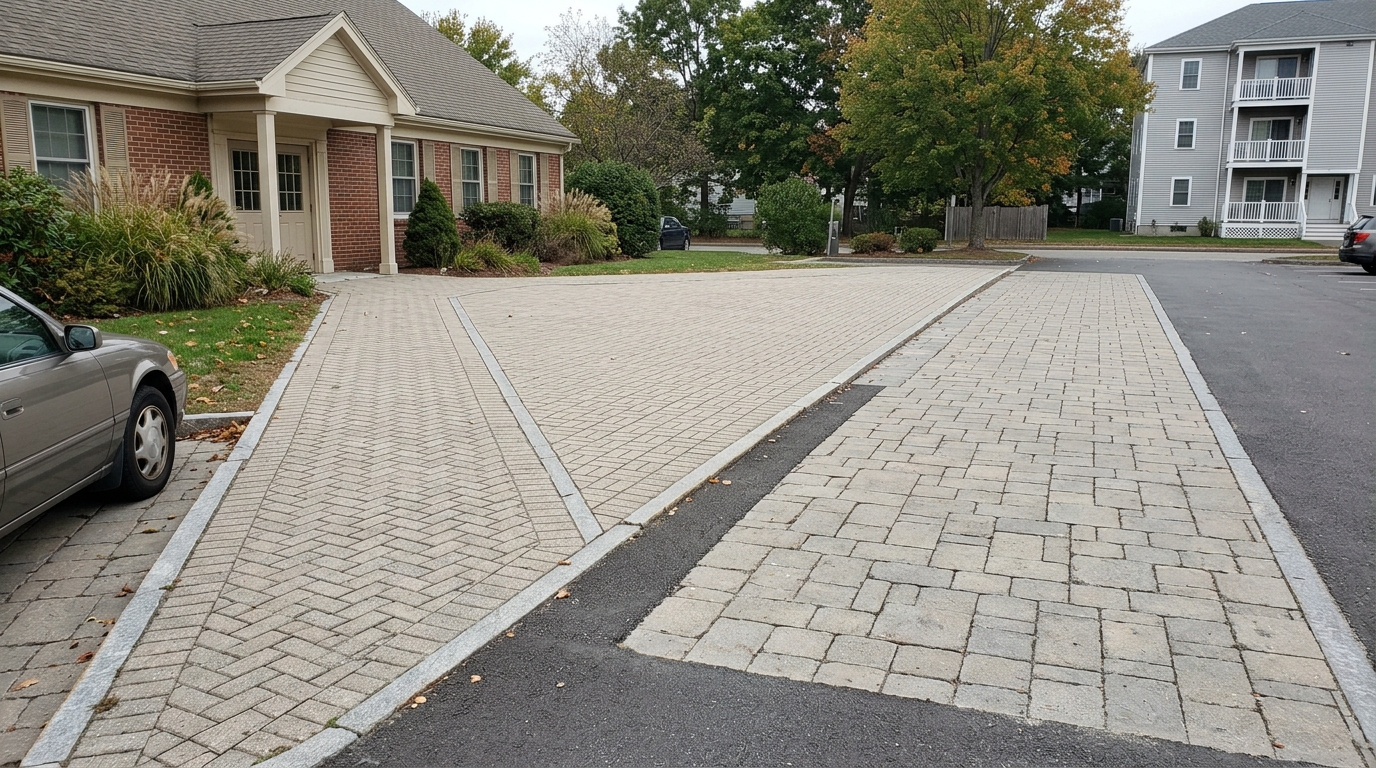
Property managers often manage one property with three different paver jobs on it: a walkway to the entrance, a plaza or courtyard where people gather, and drive lanes or aprons where vehicles cross. Treating these as one purchase is where problems start.
A pedestrian walkway carries people and the occasional maintenance cart. A plaza may need to support a lift truck during window cleaning or a box truck during an event load-in. A drive lane or dumpster apron takes repeated wheel loads in the same track, day after day, which is the hardest duty a paver surface faces. Each of these calls for its own paver thickness, laying pattern, and base depth. Herringbone patterns, for example, are typically specified in vehicular areas because they interlock against the pushing and turning forces of tires, while a running bond that looks fine on a walkway can creep and open up under wheels.
Specifying the heaviest system everywhere wastes budget; specifying the lightest everywhere fails early in the exact spots that get the most use. A site walk that maps traffic honestly, including the garbage truck's actual turning path, is what lets each zone get the system it needs.
Accessibility and Liability: Slip Resistance, Joint Tolerances, and ADA Surface Rules
Public-facing commercial properties fall under the ADA Standards for Accessible Design, and paver surfaces on accessible routes have to meet them. The standards require a surface that is firm, stable, and slip resistant. They also set physical tolerances: openings in the surface, such as joints or grates, cannot allow passage of a sphere larger than one half inch, and vertical changes in level are limited to one quarter inch, or one half inch if beveled.
Those numbers are where paver choice and installation quality meet the law. Wide-joint or tumbled products with heavily rounded edges can be difficult to keep within tolerance, and a paver that settles even slightly out of plane can put a walkway out of compliance. Slip resistance is a product question: textured finishes hold traction when wet, while some polished or sealed surfaces trade traction for appearance.
For a property manager, this is less about passing an inspection than about reducing risk. Trip-and-fall claims tend to name the surface, and a documented decision to specify compliant product on a properly built base is a stronger position than an aesthetic choice nobody can explain later.
Maintenance Reality: Snow Removal, Salt, and Section-by-Section Repairs
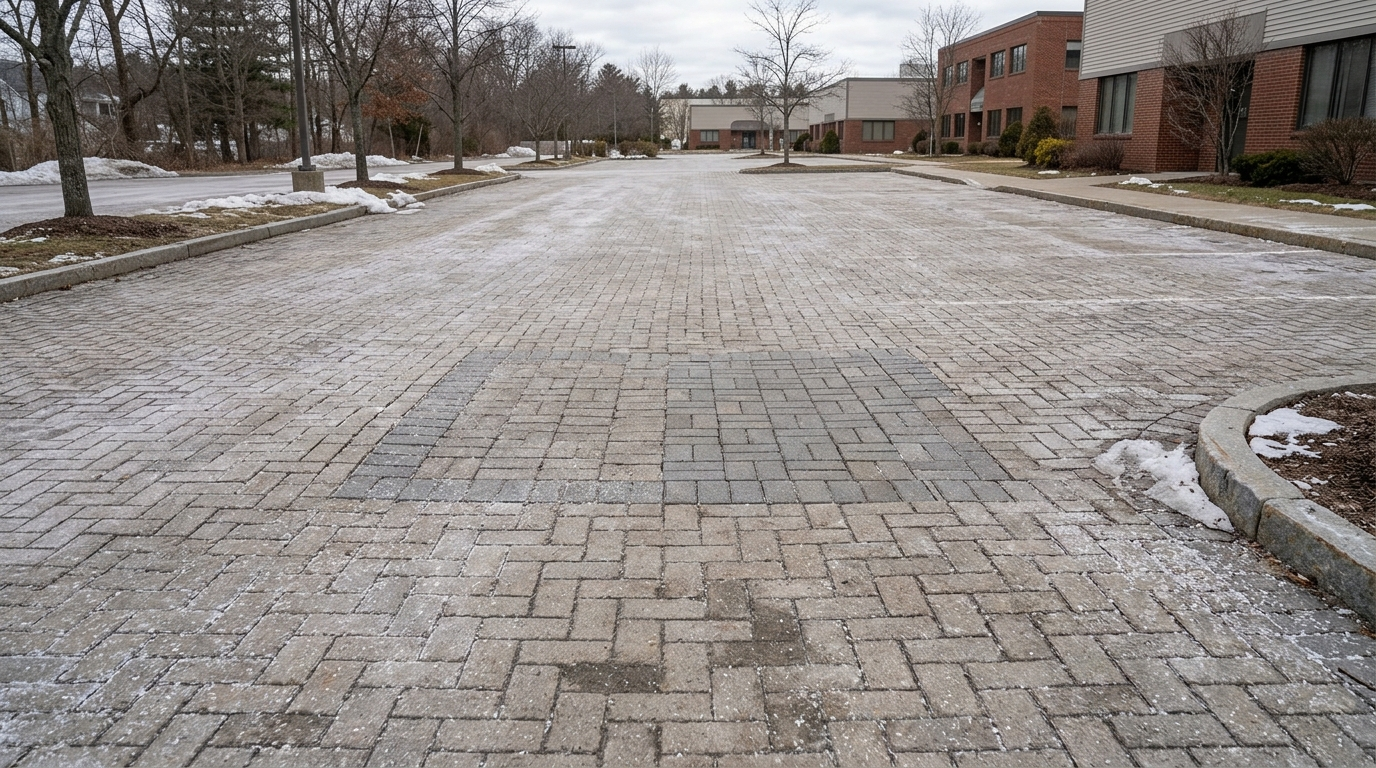
New England is hard on every pavement, and the maintenance plan should be part of the purchase decision, not an afterthought. Plowing is the first test: paver surfaces handle steel blades better when the surface is flat, the joints are tight, and the plow contractor knows the surface is pavers (shoes or poly edges on the blade prevent most scarring). De-icing salt is the second. Salt accelerates surface wear on marginal concrete product, which is one of the practical reasons the absorption limits in commercial specifications matter. Salt-rated paver product built to the C936 standard tolerates de-icing chemicals that damage economy product, and whatever de-icer gets used holds up best when it is applied sparingly.
The trait that makes pavers attractive for commercial properties shows up in year five, not year one: they repair in sections. When a utility trench has to cross a drive lane, or one area settles, the affected pavers can be lifted, the base corrected, and the same units relaid with no patch scar. Asphalt and poured concrete cannot offer that. The tradeoff is routine joint care: joint sand migrates under traffic and power washing, and a property that never replenishes it will see pavers loosen and edges open over time.
Base Construction: Why Commercial Installs Live or Die Under the Surface
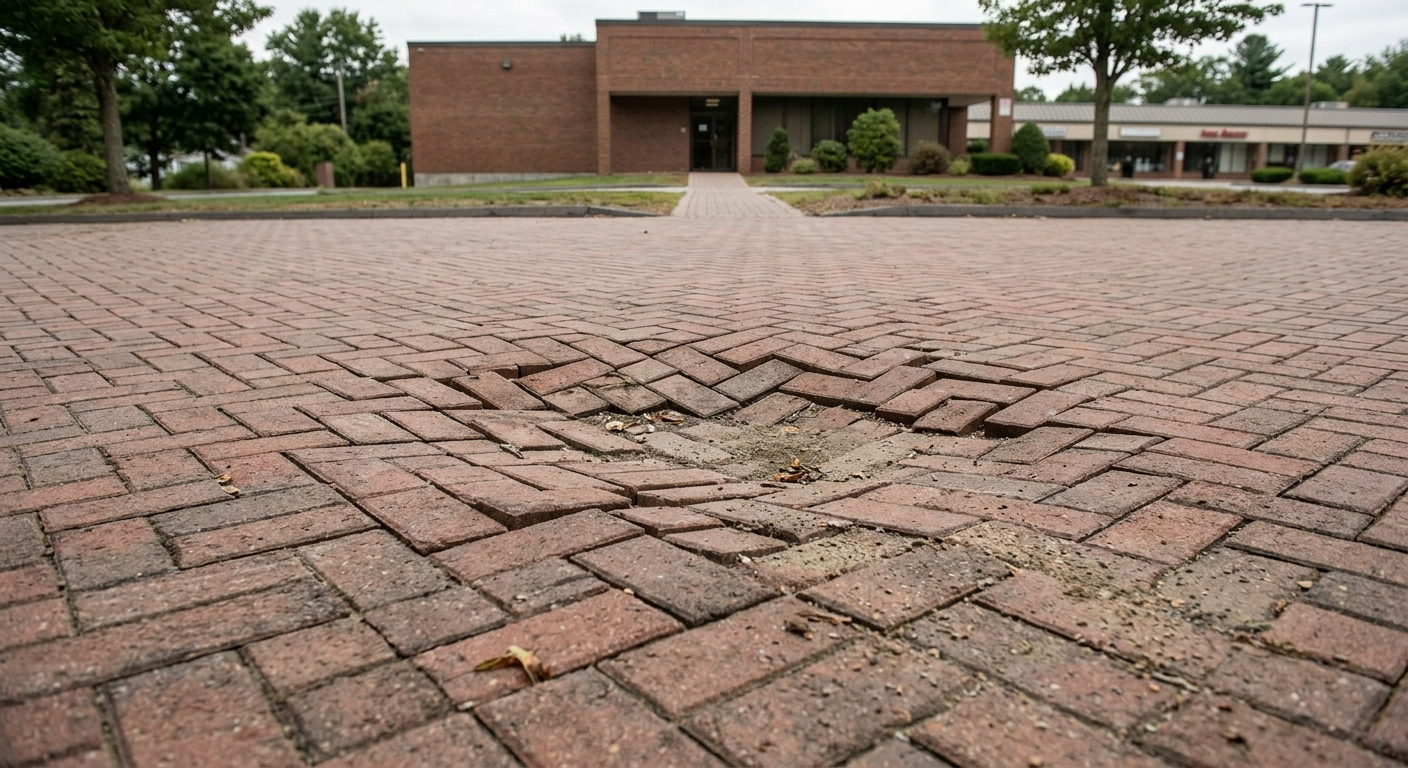
Almost every paver failure a property manager will ever deal with, settling, rutting, heaving, spreading edges, starts below the pavers. The units themselves rarely break; the base under them moves.
A commercial base starts with excavation to suitable soil, then compacted structural aggregate placed in lifts, with the depth set by the loads above and the soils below. Vehicular areas need substantially more base than walkways, and poor soils need more than good ones. Drainage runs through every part of this: water trapped in or under the base is what freeze-thaw cycles turn into heave, so grading, and in some cases subsurface drainage, is designed before any paver is chosen. Edge restraints, the anchored perimeter that keeps the field locked together, take more abuse on commercial sites and need to be specified for it.
None of this is visible at ribbon cutting, which is exactly why it is worth asking bidders about. Two quotes for the same square footage can differ mainly in what happens below grade, and the cheaper one is usually cheaper there. Base depth, compaction method, and drainage handling belong in writing in any commercial bid.
Budgeting and Phasing Paver Work Across a Property
Few properties redo every hard surface at once, and paver systems phase well when the phasing is planned. A common sequence puts safety and liability first: entrance walkways and accessible routes, where trip hazards cost the most, then high-visibility gathering areas, then drive lanes and aprons as budget allows. Because paver work is sectional, each phase can stand alone without leaving a temporary edge that fails.
Planning the phases up front, even years apart, protects the property in two ways. Product continuity: selecting a paver line with a track record, and recording the exact product and color, means phase three can match phase one. Consistent standards: writing one base and restraint specification for the whole property prevents the situation where each phase was built to a different bidder's habits and each ages differently.
Budget conversations go better with the full picture on the table. A contractor who installs both residential and commercial paver systems can walk the property, separate the zones by load and urgency, and price the work as phases rather than as one number that never fits a fiscal year. If paver work is on your property's horizon, request a commercial paver consultation: a site walk and a phased, zone-by-zone recommendation turn a rough line item into a plan you can defend.